
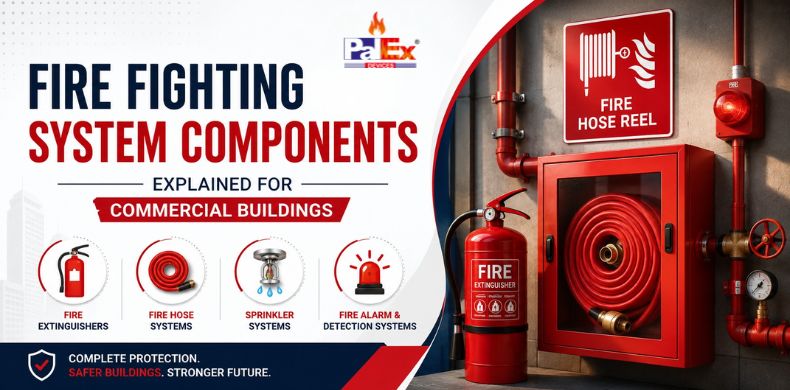

Fire protection in business buildings is not a one-size-fits-all answer, but it involves an intricately planned mix of systems that function together. Each part has a specific task and when they are combined correctly, they can greatly lessen the risk of fire spreading, structural harm and fatalities. Knowing about these elements can help building proprietors, facility supervisors and architects to make knowledgeable choices during construction or refurbishment.
Fire Detection and Alarm Systems
A good fire detection and alarm system is very important for protecting any business building. Smoke detectors, heat sensors and flame detectors always watch the surroundings to catch early signs of a fire. When they find danger, the alarm goes on right away to warn people in the building and start other firefighting devices as well. Nowadays, systems are linked together across different levels. This makes sure that every area is watched over no matter the size or design of the building.
Sprinkler Systems
Sprinkler systems that work automatically are one of the best methods to control fire in business places. These kinds of systems have a connection with water supply under pressure and they start working individually where a heat source is present. Many people think wrongly that all sprinklers begin at the same time, but every head works on its own. This managed reaction reduces water harm to areas not affected while controlling the fire exactly where it is burning.
Fire Hydrant and Hose Reel Systems
Hydrant systems give a big amount of water supply for the teams fighting fire when there are major happenings. These consist of outside hydrant points, inside landing valves and pipes that run through the building connected to them. Hose reels are made differently; they are meant for first responders or trained staff in buildings who handle small fires before these grow bigger. Combined, these systems provide both experts and trained staff with the proper tools to react efficiently.
Fire Suppression Systems for Special Zones
In commercial buildings, there are specific places like server rooms, electrical panels and archival spaces where water-based suppression can’t be used because it may harm the equipment. For these areas, we use gas or clean agent suppression systems instead. These systems release fire-fighting agents that remove oxygen around the fire but do not leave any residue or cause additional damage to delicate assets. Palladimuss provides engineered solutions fit for such high-value and high-risk environments.
Fire Doors and Compartmentation
Passive fire protection is also very significant in a full firefighting arrangement. Fire rated doors, walls and floor setups are made to keep the fire within a certain area for an established duration. This division stops quick spreading and allows people inside enough time to leave safely. It also safeguards the building’s structure long enough for emergency services to step in and manage the situation.
Control Panels and Monitoring Units
In a commercial building, all the active systems for fighting fire are controlled by one main fire alarm panel. This device shows where exactly an alarm has been triggered. It also checks on the health of the system and manages responses across linked systems. In bigger buildings, it works with remote monitoring and integrates with other management systems in order to make sure alerts get to appropriate staff without any delay. A properly set up control panel acts as the brain for the whole fire protection arrangement.
