
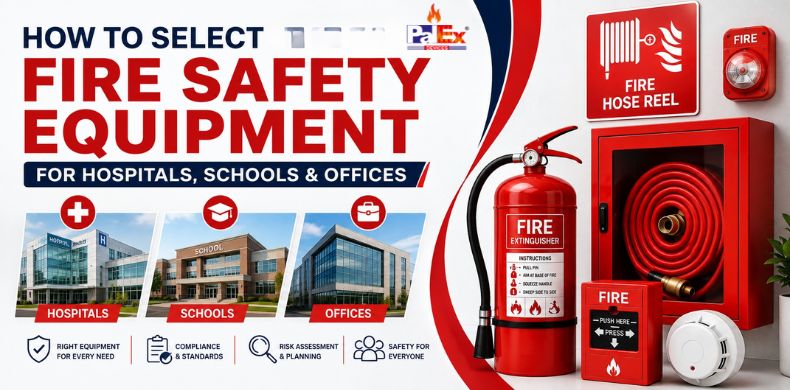

Fire safety gear is not a universal solution. Different places like hospitals, schools and offices have their own unique challenges because of the number of people they hold, their structure and the level of risks involved. Picking appropriate equipment requires knowledge about each place’s specific needs, understanding possible fire dangers and following relevant standards for compliance. An effectively arranged fire safety system could be the deciding factor between a small mishap and a huge disaster.
Understanding the Risk Profile of Each Space
The initial stage in choosing fire safety gear is understanding the risk level of the structure. Medical supplies, gases and electrical equipment that can catch fire are stored in hospitals, so they are high-risk places. Schools have many people gathered within small classrooms and hallways. Offices mainly handle electrical dangers and paper-based items. Every place requires a specific method, not just a general setup.
Fire Extinguishers: Choosing the Right Type
Fire extinguishers do not all function on every kind of fire. In offices where electrical fires are a usual occurrence, CO2 extinguishers are more preferred. Hospitals need to use both clean agents and water mist extinguishers as they have to safeguard delicate equipment along with patients at the same time. Schools usually find dry powder or foam extinguishers useful for labs and utility zones. It is important to always match the class of extinguisher with the particular fire risk in each area.
Fire Detection Systems That Suit the Environment
Finding early can save lives. It is common to have smoke detectors, but the kind of detector matters a lot. Optical smoke detectors are best for places that may experience slow-burning fires most often; ionisation detectors work better and quicker when there are fast-flaming fires. Hospitals require multiple sensor detectors to prevent false alarms in zones where smoke from sterilization procedures is frequent. Schools and workplaces must give importance to linked systems, ensuring that if an alarm goes off in one section of the building, it notifies the whole place immediately.
Suppression Systems for High Risk Area
Automatic suppression systems provide an essential extra level of security besides just detecting. Sprinkler systems are commonly found in offices and schools because they work well to quickly control fires. But, hospitals have to choose gaseous suppression systems for places like ICUs, server rooms and operation theatres as water can harm both patients and important medical devices. Palladimuss provides clean agent suppression solutions that are specially made to guard such delicate environments without leaving residue.
Emergency Lighting and Signage: Often Overlooked
Only when people can move safely in poor visibility, evacuation becomes successful. It is necessary to install emergency lights regularly along all paths of exit. Even during a total power outage, photoluminescent exit signs guarantee visibility. This is particularly crucial in hospitals because many patients might not be able to move without help. Schools that have several levels require clearly indicated stairway lighting and signs at each landing area.
Regular Inspection and Compliance Verification
Choosing the correct equipment is just a part of it. Fire safety systems need regular checking to stay functional. Local fire safety rules mention how often the equipment should be tested and serviced, so following that is necessary. In India, the buildings have to follow guidelines from the National Building Code. If there is any failure in following these rules, it can lead to severe legal issues. Keeping a record of service and planning yearly checks makes your system dependable and ensures safety for people living or working inside.
