
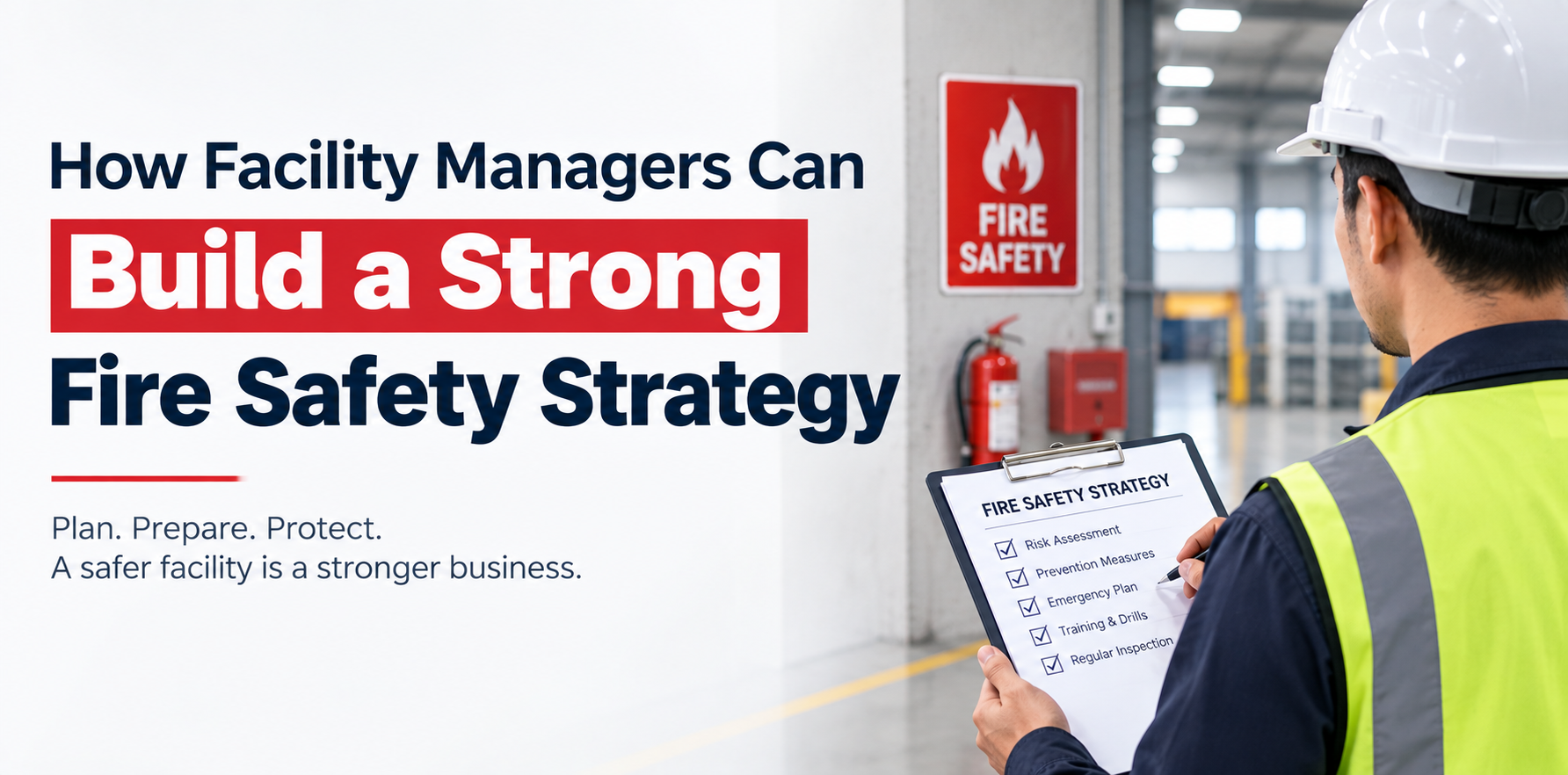

Fire safety is more than having fire extinguishers and fire alarms in place. As a facility manager, it entails an ongoing strategy for fire prevention, detection, and response. Regardless of what kind of premises you run – whether it is a factory, warehouse, office, hospital, school, hotel, or any other kind of building – an effective fire safety plan can go a long way in keeping your staff, assets, and operations safe.
Some of the ways that facility managers can develop an effective fire safety plan include:
1. Start with Conducting a Comprehensive Fire Risk Assessment
The first thing that facility managers must do is determine the risk of fire in their facilities. They will have to consider all potential sources of fire.
2. Select the Correct Fire Safety System
Every building has varying fire hazards. The fire safety strategy needs to consider the particular demands of the facility.
Some of the measures that may be incorporated, depending on the use of the building, may include:
- Fire alarm and detection system
- Fire extinguisher
- Hydrant and hose reel systems
- Automatic sprinkler system
- Fire suppression system
- Emergency lighting system
- Fire door and exit signs
The intention here is to go for an integrated approach instead of depending on just one measure of fire safety.
3. Arrange for Fire Safety Equipment Inspection and Maintenance
Fire safety equipment should at all times be functional. It is the job of the facility manager to organize inspection and maintenance of the fire alarms, fire detectors, fire extinguishers, hydrants, sprinklers, pumps, emergency lights, and any other fire safety equipment.
The deficiencies identified from inspection should be corrected.
4. Make Sure That Fire Exit Routes Are Always Accessible
For a fire safety plan to be effective, it should have well-laid out exit routes. It is important to make sure that the stairs, walk ways, fire doors, and fire exits remain clear.
It is also important to make sure that there is a proper assembly area for the evacuated people.
5. Develop a Proper Emergency Response Plan
All the occupants of the building should be aware of how to respond once the fire alarm sounds.
An effective emergency response plan will include:
- Alarm and notification procedures
- Evacuation routes
- Contact information for emergencies
- Assembly points
- Duties of fire wardens
- Visitors and vulnerable occupants assistance procedures
- Coordinating with emergency services
The plan should be revised from time to time when there is any change in the facility’s condition.
6. Regular Fire Drills and Employee Training
The fire safety plans would be useless if the people did not know what to do.
With regular fire drills and employee training, everyone would be informed about the process of evacuation, fire alarms, escape routes, and assembly points. The employees involved in certain activities in case of an emergency need to be trained properly.
7. Conduct Monitoring for High Risk Operations
The facility management staff needs to carry out monitoring operations involving heat, sparks, chemicals, flammable fluids, and other combustible materials.
Operations like welding, cutting, grinding, and others requiring heat application should be conducted properly.
8. Documentation
Your fire safety management strategy also needs to have proper documentation in order to be effective. You need to document all your inspections, maintenance, testing, fire drills, training, risk assessments, incidents reports and corrective actions.
Proper documentation will help you detect any recurring problem areas that you may have.
9. Constantly Review and Adjust Your Fire Safety Strategy
Fire safety is a never-ending cycle. The management of a facility should constantly review and adjust the fire safety strategy according to any new factors concerning the building use, occupancy, equipment, process modifications, regulatory changes, and so forth.
It is essential that prevention, preparedness, detection, response, and maintenance work in synergy to form your fire safety strategy.
Make Your Facility Safer and Prepared
Your fire safety strategy will be more than a simple list of regulations to be followed. Instead, it will allow you to have a well-organized plan concerning the fire risk assessment, system maintenance, staff training, and preparedness.
Fire safety and fire protection solutions provided by the specialists of Palladium Fire Safety Solutions will assist you in creating an effective fire safety strategy.
Would you like to create a fire safety strategy? Contact us at Palladium Fire Safety Solutions.
