
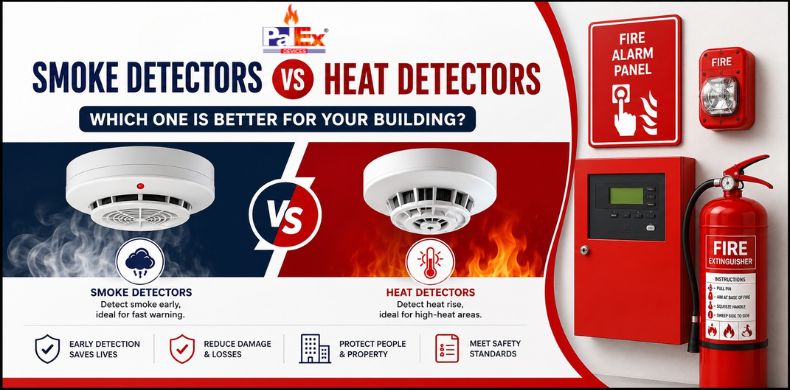

Picking the appropriate detection system is a very important fire safety choice for someone who owns a building or manages facilities. Smoke detectors and heat detectors each have different uses, knowing these differences can help to make sure your building gets the necessary protection it truly requires. No one detector is better in all situations. The correct decision relies on understanding the type of area, fire risk situation and what sort of early alert your people need.
How Smoke Detectors Work
Smoke detectors work by noticing combustion particles in the air. This makes them very good at finding fires when they are just starting, often even before we see any flames. They are commonly used in places where many people live or work because it’s important to evacuate early if there is a fire risk. These devices react fast to smoldering fires and thus give more time for everyone to leave safely. But, they might set off false alarms in places with lots of dust, steam or smoke such as kitchens and factories.
How Heat Detectors Work
Heat detectors react when the surrounding temperature goes up, not to smoke or gas presence. These are made for places where conditions might make smoke detectors untrustworthy. Places like garages, boiler rooms, storage spaces and kitchens are such areas where heat detectors work with more reliability. They activate more slowly than smoke detectors but they cause significantly fewer false alarms. This makes them a trustworthy choice in tough environments where reliability is valued over speed.
Key Differences That Matter
The main difference is in what each device keeps an eye on. Smoke detectors watch for changes in air quality caused by burning things, but heat detectors look out for temperature shifts. This straight away affects where you should put each device. Places where fire can rapidly grow and produce heat before smoke might be more suitable for heat detectors. On the other hand, areas such as bedrooms, offices or common rooms could benefit more from smoke detectors because they respond quickly and can detect fires that burn slowly.
Which One Does Your Building Actually Need?
Usually, it is better for most structures to use a mix of both types of detectors instead of depending on just one. Smoke detectors are quite suitable for common spaces, offices, corridors and bedrooms. On the other hand, heat detectors serve utility rooms, parking lots, attics and industrial areas more effectively. Using a tiered detection method guarantees that any fire situation will be noticed, no matter the origin or location. It is always smart to seek advice from a certified expert in fire safety before setting up anything.
What Palladimuss Recommends
Palladimuss provides various fire detection items that are crafted to satisfy the needs of different kinds of buildings. It doesn’t matter if you’re equipping a house, a business office, or an industrial site – choosing the correct detector can greatly impact safety results and system dependability. The aim is constantly for a configuration that spots early on, alarms with precision and prevents needless disturbances from false activations.
Conclusive Words
In fire detection, there is not a universal solution that fits all situations. Smoke detectors provide quick and sensitive responses, whereas heat detectors deliver steady and durable reactions in challenging environments. By comprehending the distinct fire hazards of every area within your structure, you can create a thorough and smart network for detecting fires. Putting money in the right mix today could stop terrible results in the future.
