ABOUT     |     CONTACT     |     CAREER     |     BLOG     |     For sales & dealership enquiries call icon +91-99718-90006

Fire Extinguisher Refilling Process Explained

Fire extinguishers become less effective after they have been used, even if only a little. Refilling them brings back the pressure and extinguishing substance so that it works well when you need it. There are many building owners who postpone this task because they do not understand that an extinguisher which has been partly utilized provides almost no defense during a real fire situation. Filling is not optional maintenance, it is a responsibility for safety.

When Does a Fire Extinguisher Need Refilling?

Any extinguisher which has been used, even for a short time, needs immediate refilling. Besides being emptied, regular pressure inspections can show gradual leaks that make them less effective as the days go by. A lot of producers and fire safety rules suggest a professional check-up once every year. If the needle of the pressure gauge is not in the green zone, the unit requires care even if it was never used.

Who Should Handle the Refilling?

Refilling should be carried out by a certified fire equipment service provider. This is not a job for people who do not have training. Technicians possess the right tools, suitable extinguishing substances and knowledge to check internal parts during this process. If you try to refill a unit without training or certification, it might lead to wrong pressurization, contamination of the agent, or damage to the cylinder. These issues could cause serious dangers.

Step by Step: The Refilling Process

Depressurization and Disassembly

The technician begins work by ensuring any leftover pressure in the cylinder is safely released. Then, they carefully take out the valve assembly. This phase needs exactness as cylinders with pressure can be hazardous if not handled properly. At this point, all inside components such as the siphon tube, valve stem and seals are taken out for separate checking.

Internal Inspection

When the cylinder is taken apart, we look inside for any rust, holes, water buildup or damage to the structure. We clean out any leftover substance from before. If a cylinder has too much rust or damage, it is taken out of use and not filled again. This checking stage distinguishes expert service from just a basic refill.

Agent Refilling

The right amount of extinguishing agent, as specified by the manufacturer, is filled in. Different types of extinguishers use different agents. Water, dry chemical powder, CO2 and foam each have particular requirements for filling. If you use the wrong substance or not enough of it, the extinguisher will not work properly and may lose its certification. Equipment for correct filling is necessary to make sure we measure accurately each time.

Repressurization and Sealing

Once the filling is done, the valve setup is put back and we make the cylinder pressurized with suitable gas, usually nitrogen for dry chemical kinds. We increase pressure to a level as mentioned on the extinguisher label. To ensure that nobody has touched the unit after service, we insert the safety pin again and replace the tamper seal.

Final Testing and Labeling

The technician carries out a pressure test and makes sure the gauge is reading properly within the safe area. A service label gets attached, it includes refill date, details of the technician and when next inspection should be done. This documentation is necessary for following rules in the majority of commercial or industrial places.

How Often Should Refilling Be Scheduled?

After they have been used, CO2 and stored pressure fire extinguishers usually need a hydrostatic test every five years. Dry chemical ones might need full internal maintenance every six years. If you follow the instructions from manufacturers as well as local rules for fire safety, it ensures that these cylinders stay in good condition and are legal to use.

The Cost of Skipping a Refill

A fire extinguisher that is empty or not under enough pressure, hanging on the wall bracket can be a problem. It makes people feel safe wrongly because it cannot stop fire at all. The cost to refill it is much less than what you might have to pay for damage from fire, fines from law violations, or claims for injuries. Keeping extinguishers properly serviced is always the more practical choice.
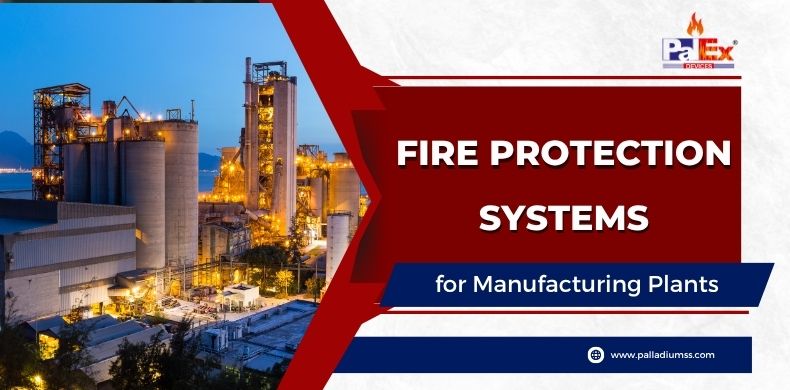
Fire Protection Systems for Manufacturing Plants

Manufacturing plants function with a special mix of heat, chemicals, machines and big open areas that make them very susceptible to fire happenings. One spark can quickly spread across the whole place, putting workers, equipment and stock at risk. Putting in proper fire protection systems is not just an option for operation but it’s a basic safety need which every plant has to tackle with exactness and preparation.

Understanding the Fire Risks in a Plant Environment

In manufacturing surroundings, fire risks are created in various ways at the same time. Issues with electricity in large machines, raw materials that can easily catch fire, dust from processing tasks which are able to combust and heat produced by industrial devices all cause an increased danger. To begin forming a safety plan, one must comprehend the unique risk situation of a particular plant. For example, a chemical processing place needs a very distinct arrangement of system than that which is needed for textile or woodworking plants.

Automatic Sprinkler Systems

Sprinkler systems are still the most common method used for suppression in industrial places. These modern methods are designed to start working only at the area where fire begins, this helps prevent water damage in other parts that are not affected by fire. There are different types like wet pipe, dry pipe and deluge which can be utilized under various plant situations. Dry pipe systems are quite effective in areas that freeze, whereas deluge systems fit well in high-risk zones needing immediate and complete discharge coverage when detected.

Gaseous Suppression for Sensitive Areas

Rooms like control rooms, server infrastructure areas, electrical switchgear spaces and places for precision manufacturing usually cannot handle water based suppression. Gaseous fire suppression systems that use agents such as FM 200 or mixes of inert gases fill this need. These kinds of agents put out fires by lowering the concentration of oxygen or breaking the chemical chain reaction in a way that doesn’t leave residue behind or harm equipment. The reaction time is quick and these systems can be used in closed areas where other techniques might do more damage than the fire itself.

Fire Detection and Early Warning Systems

Just putting out the fire is not enough without a good system to detect it as early as possible. In factories, they use big and strong systems that mix smoke detectors, heat sensors and flame spotters placed in every area of the plant. There are also smoking detection networks which pull air samples nonstop through pipes to find tiny bits of smoke even when regular detectors can’t sense them. Finding out early gives workers additional time to leave and permits control systems to start working before a fire grows beyond its starting point.

Foam Based Systems for Flammable Liquid Hazards

Plants that deal with petrol-based items, solvents or other combustible liquids need systems for foam suppression. The foam functions by covering the surface of the liquid, blocking oxygen supply and stopping vapor release. Low expansion foam is often applied to storage tanks and loading zones while high expansion foam is appropriate for closed areas like warehouses which store flammable substances. The design of the system has to consider the particular type of liquid hazard. This is because various foam concentrates are made for different categories of fuel.

Maintenance and System Integrity

A fire protection system’s reliability depends on how well it is maintained. Sprinkler heads can gather dust and rust as time passes. Detection sensors may gradually become unbalanced from their proper setting. Gas cylinders with gas lose pressure. It is necessary to do scheduled checks, tests and services for every part of the system to make sure all performs as it should when needed. Most regulatory compliance frameworks demand documented inspection cycles in most areas and plants that miss these intervals could face legal issues alongside real safety risks.

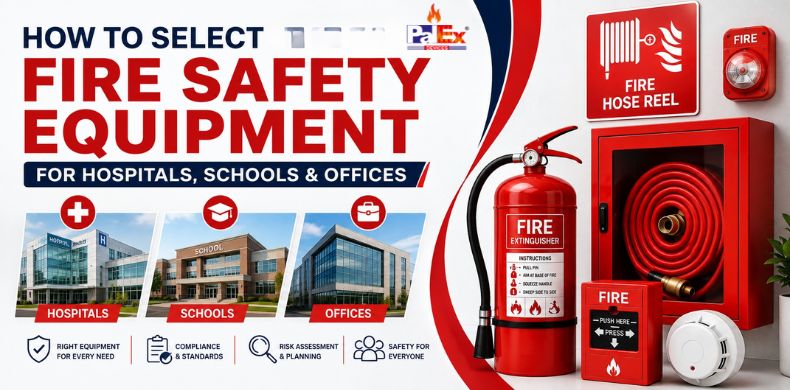
How to Select Fire Safety Equipment for Hospitals, Schools and Offices

Fire safety gear is not a universal solution. Different places like hospitals, schools and offices have their own unique challenges because of the number of people they hold, their structure and the level of risks involved. Picking appropriate equipment requires knowledge about each place’s specific needs, understanding possible fire dangers and following relevant standards for compliance. An effectively arranged fire safety system could be the deciding factor between a small mishap and a huge disaster.

Understanding the Risk Profile of Each Space

The initial stage in choosing fire safety gear is understanding the risk level of the structure. Medical supplies, gases and electrical equipment that can catch fire are stored in hospitals, so they are high-risk places. Schools have many people gathered within small classrooms and hallways. Offices mainly handle electrical dangers and paper-based items. Every place requires a specific method, not just a general setup.

Fire Extinguishers: Choosing the Right Type

Fire extinguishers do not all function on every kind of fire. In offices where electrical fires are a usual occurrence, CO2 extinguishers are more preferred. Hospitals need to use both clean agents and water mist extinguishers as they have to safeguard delicate equipment along with patients at the same time. Schools usually find dry powder or foam extinguishers useful for labs and utility zones. It is important to always match the class of extinguisher with the particular fire risk in each area.

Fire Detection Systems That Suit the Environment

Finding early can save lives. It is common to have smoke detectors, but the kind of detector matters a lot. Optical smoke detectors are best for places that may experience slow-burning fires most often; ionisation detectors work better and quicker when there are fast-flaming fires. Hospitals require multiple sensor detectors to prevent false alarms in zones where smoke from sterilization procedures is frequent. Schools and workplaces must give importance to linked systems, ensuring that if an alarm goes off in one section of the building, it notifies the whole place immediately.

Suppression Systems for High Risk Area

Automatic suppression systems provide an essential extra level of security besides just detecting. Sprinkler systems are commonly found in offices and schools because they work well to quickly control fires. But, hospitals have to choose gaseous suppression systems for places like ICUs, server rooms and operation theatres as water can harm both patients and important medical devices. Palladimuss provides clean agent suppression solutions that are specially made to guard such delicate environments without leaving residue.

Emergency Lighting and Signage: Often Overlooked

Only when people can move safely in poor visibility, evacuation becomes successful. It is necessary to install emergency lights regularly along all paths of exit. Even during a total power outage, photoluminescent exit signs guarantee visibility. This is particularly crucial in hospitals because many patients might not be able to move without help. Schools that have several levels require clearly indicated stairway lighting and signs at each landing area.

Regular Inspection and Compliance Verification

Choosing the correct equipment is just a part of it. Fire safety systems need regular checking to stay functional. Local fire safety rules mention how often the equipment should be tested and serviced, so following that is necessary. In India, the buildings have to follow guidelines from the National Building Code. If there is any failure in following these rules, it can lead to severe legal issues. Keeping a record of service and planning yearly checks makes your system dependable and ensures safety for people living or working inside.

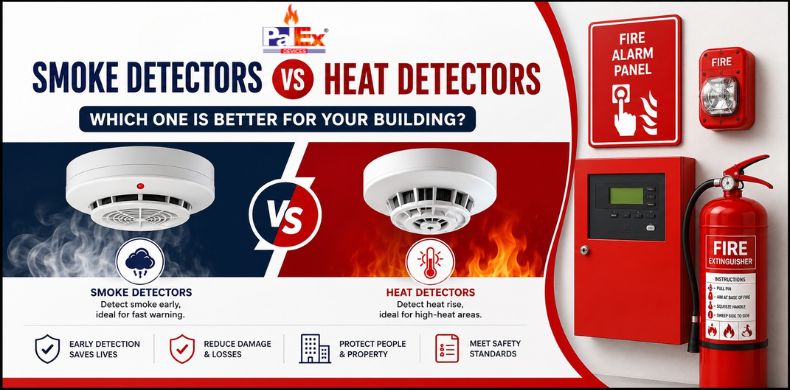
Smoke Detectors vs Heat Detectors: Which One Is Better for Your Building?

Picking the appropriate detection system is a very important fire safety choice for someone who owns a building or manages facilities. Smoke detectors and heat detectors each have different uses, knowing these differences can help to make sure your building gets the necessary protection it truly requires. No one detector is better in all situations. The correct decision relies on understanding the type of area, fire risk situation and what sort of early alert your people need.

How Smoke Detectors Work

Smoke detectors work by noticing combustion particles in the air. This makes them very good at finding fires when they are just starting, often even before we see any flames. They are commonly used in places where many people live or work because it’s important to evacuate early if there is a fire risk. These devices react fast to smoldering fires and thus give more time for everyone to leave safely. But, they might set off false alarms in places with lots of dust, steam or smoke such as kitchens and factories.

How Heat Detectors Work

Heat detectors react when the surrounding temperature goes up, not to smoke or gas presence. These are made for places where conditions might make smoke detectors untrustworthy. Places like garages, boiler rooms, storage spaces and kitchens are such areas where heat detectors work with more reliability. They activate more slowly than smoke detectors but they cause significantly fewer false alarms. This makes them a trustworthy choice in tough environments where reliability is valued over speed.

Key Differences That Matter

The main difference is in what each device keeps an eye on. Smoke detectors watch for changes in air quality caused by burning things, but heat detectors look out for temperature shifts. This straight away affects where you should put each device. Places where fire can rapidly grow and produce heat before smoke might be more suitable for heat detectors. On the other hand, areas such as bedrooms, offices or common rooms could benefit more from smoke detectors because they respond quickly and can detect fires that burn slowly.

Which One Does Your Building Actually Need?

Usually, it is better for most structures to use a mix of both types of detectors instead of depending on just one. Smoke detectors are quite suitable for common spaces, offices, corridors and bedrooms. On the other hand, heat detectors serve utility rooms, parking lots, attics and industrial areas more effectively. Using a tiered detection method guarantees that any fire situation will be noticed, no matter the origin or location. It is always smart to seek advice from a certified expert in fire safety before setting up anything.

What Palladimuss Recommends

Palladimuss provides various fire detection items that are crafted to satisfy the needs of different kinds of buildings. It doesn’t matter if you’re equipping a house, a business office, or an industrial site – choosing the correct detector can greatly impact safety results and system dependability. The aim is constantly for a configuration that spots early on, alarms with precision and prevents needless disturbances from false activations.

Conclusive Words

In fire detection, there is not a universal solution that fits all situations. Smoke detectors provide quick and sensitive responses, whereas heat detectors deliver steady and durable reactions in challenging environments. By comprehending the distinct fire hazards of every area within your structure, you can create a thorough and smart network for detecting fires. Putting money in the right mix today could stop terrible results in the future.

Difference between Stored Pressure and Cartridge-Operated Fire Extinguishers

Fire extinguishers are primarily designed in two different ways according to how they release their fire suppressant: the stored pressure type and the cartridge operated fire extinguisher type. These designs illustrate fundamentally distinct strategies for creating pressure that is necessary to effectively use a fire suppressant during an emergency situation with flames.

How Stored Pressure Fire Extinguishers Work

The design of stored pressure is what you usually find in homes and places of work. This setup keeps both the putting out fire substance along with the gas that pushes it (often nitrogen) inside one cylinder as a single unit. Inside this extinguisher, there’s always maintained pressure making it prepared for instant use whenever required.

Fire extinguishers that work with stored pressure and those operated by a cartridge are different in their build. For models of the stored pressure, they come with a gauge for checking the pressure status just by looking at it. This gauge is very important because it shows if there is enough pressurization within the extinguisher to function well when there’s need for its use during an emergency situation.

Also read : Revolutionizing Fire Safety with Technology: From Smart Sensors to Automated Firefighting Equipment

How Cartridge-Operated Fire Extinguishers Work

Cartridge-type extinguishers have a different method. They keep the extinguishing substance in their main body and store the gas used to release it in another small cartridge. When you trigger this extinguisher, the tiny cartridge is cracked open. This releases compressed gas into its main part, pushing out the substance that puts out fire.

The gap between the agent and propellant in a stored pressure and cartridge run fire extinguisher results in unique operational qualities. Cartridge-run types do not need a pressure gauge because, until activation, the propellant does not come into contact with the extinguishing agent.

Maintenance Differences

The needs for upkeep can differ greatly between stored pressure and cartridge activated types of fire extinguishers. Those with stored pressure need frequent checks on their pressure because they may slowly lose it over a period due to tiny leaks. If the pressure drops under working levels, usually the whole unit will need professional re-charging.

Models that operate with cartridges bring benefits in terms of upkeep. As the propellant is kept within the cartridge until it’s required, there are less worries about losing pressure as time goes by. Furthermore, many models can be filled up on-site after they’re used just by swapping out the extinguishing substance and the expelling cartridge.

Also read : Benefits of Installing Fire Sprinklers in Residential and Commercial Buildings

Performance Considerations

When we look at how they perform, stored pressure and cartridge operated fire extinguisher types each come with their own benefits. Models of stored pressure provide readiness immediately and are easier to operate. The design they hold needs less steps for activation; this can be very important in a stressful fire emergency situation.

Models of cartridge might need an additional step for activation, but usually provide steady pressure during the process of discharge. This may lead to a better delivery of agents, particularly in bigger models that are used for applications in industry.

Choosing the Right Type

The selection of these extinguisher kinds is reliant on particular requirements. The stored pressure models are usually more economical and appropriate for many residential and minor business settings. Their easy-to-use nature makes them available to unskilled individuals.

In industries, marine uses and severely weathered areas, people often choose extinguishers that operate with cartridges. They store the expellant and agent separately which gives them better performance in rough conditions. Also, it makes their care easier in far-off places.

Comprehending the variations between these two patterns assists in making knowledgeable choices about fire safety apparatus selection based on particular environmental needs and maintenance abilities.

Related blog :

Evaluation Factors to Choose the Top Fire Protection Companies

Do Not Keep Your Fire Escape Plans a Secret

10 Common Fire Extinguisher Mistakes You Should Avoid

Warehouse Fires – A Nightmare for a Business

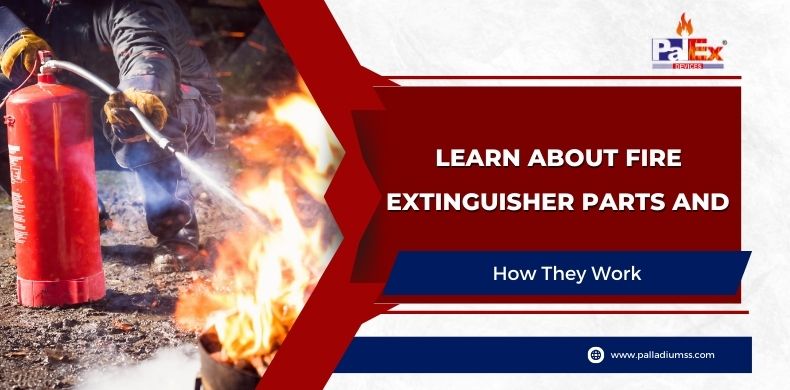
Learn About Fire Extinguisher Parts and How They Work

Fire extinguishers are very important safety things that can stop small fries from turning into big, dangerous ones. It is good to know about the parts of a fire extinguisher and what they do, so you use them correctly when there is an emergency. Every part has a key job in how well the extinguisher works and serves its purpose.

The External Components

The cylinder is the primary body which holds the extinguishing substance. Constructed from steel or aluminum, it’s created to endure pressure yet remain easy to move around. The handle unit consists of a carrying handgrip and releasing lever that sets off the extinguisher. These external fire extinguisher parts are engineered for quick access and ease of use.

Also read : How Do I Know If My Fire Extinguisher Needs to Be Recharged?

The Internal Mechanism

Within the cylinder, there is a siphon tube that stretches from the valve assembly down to the base of the extinguisher. When it’s switched on, this moves up and out of the nozzle for putting out fire. The force or power required to release a fire suppression agent comes typically from nitrogen or carbon dioxide which acts as propellant inside.

The stopping substance is maybe the most important piece of all parts in a fire extinguisher, changing depending on its class. Usual substances are water, foam, carbon dioxide, powder with dry chemicals and wet chemicals that each one has been created to fight particular types of fires.

How These Parts Work Together

When you apply pressure on the handle, it opens a valve. This permits the pressurized fuel to push out fire extinguishing substances through a siphon tube. The components of fire extinguisher work together flawlessly for delivering this agent via pipe and spout at right pressure and pattern.

The secure pin helps to stop unexpected release of the device during its transportation or storage. Always make certain this pin is in place during your checks but take it out before using the item. The seal that shows any tampering signifies if someone has used a fire extinguisher earlier and requires you to inspect it again.

Also read : The Different Types of Fire Extinguishers and How to Use Them

Maintenance Considerations

It is very important to regularly look at all parts of a fire extinguisher for it to function correctly. Every month, we should visually check if there is any damage, rusting or meddling. Annually professional upkeep must be done where pressure tests and internal checks should follow the instructions given by the maker company.

Knowing about these parts can make sure that you are able to use and take care of this life-saving tool at the time when it’s most needed.

Related blogs :

How do Dry Chemical Fire Extinguishers Work?

10 Common Fire Extinguisher Mistakes You Should Avoid

Why do Fire Extinguishers Need to be Serviced?

Types and Classification of Fire Extinguisher

Why Should You Keep a Fire Extinguisher in the Car?

Sudden fires can occur in vehicles, changing an ordinary ride into a critical situation within a few seconds. If you have a fire extinguisher in your car, it offers quick defense against these emergencies. It has the capacity to save many lives and also stop severe damage to the vehicle.

Rapid Response to Engine Fires

The fires in the engine part are one of the greatest dangers for fire in vehicles. Oil leakages, electric short circuits or heating too much can cause quick ignition of items that catch fire easily. Having a firefighting tool inside your car makes it possible to deal with small fires before they become bigger and uncontrollable flames.

When time is crucial, delay in waiting for emergency help may lead to total loss of the car. If you have suppression tools ready at hand, it gives you the advantage to act fast before fire grows throughout the vehicle.

Also read : What are the 3 Most Common Fire Extinguishers?

Protection for Passengers

The safety of your passengers is the most important thing. If there is a fire in a vehicle, it can create poisonous smoke and quickly cover the entire inside part of the car. Possessing a fire extinguisher in a car provides you a chance to make way for escape and defend people close to you during an urgent situation.

Children and old people, they perhaps require more help when needing to evacuate. The time saved by utilizing a fire extinguisher can mean a lot in making sure that all individuals leave safely.

Assistance for Other Motorists

Emergencies on the road are not only your problem, they can occur to others too. If you keep a fire extinguisher in your car, it gives a chance for helping other drivers if their vehicles catch fire and possibly safeguarding more lives than just from your own vehicle.

This basic readiness changes you from a powerless observer into an individual who can do something of significance when there are emergencies on the road.

Also read : How Do I Know If My Fire Extinguisher Needs to Be Recharged?

Types of Extinguishers for Vehicles

Not every fire extinguisher is appropriate for cars. Search for small, dry chemical ABC extinguishers made especially for use in vehicles. These handy instruments fight against electrical fires, liquid fires and solid combustible material fires – which includes the majority of the fire situations on a vehicle.

Put your fire extinguisher in the car safely, close to the driver’s hand but not so that it might be thrown around during a crash. Beneath the front seat or within a special holder gives easy access without putting safety at risk.

Regular Maintenance Matters

Similar to all protective gear, you must often examine your vehicle fire extinguisher. Look at pressure indicators every month and make certain the pin and tamper seal are stable. Replace expired extinguishers right away – a non- working extinguisher does not offer safety when it’s most required.

The little money you put into being ready for car safety gives very important comfort and calmness in all trips that you make.

Related blogs :

The Different Types of Fire Extinguishers and How to Use Them

How do Dry Chemical Fire Extinguishers Work?

10 Common Fire Extinguisher Mistakes You Should Avoid

The Different Types of Fire Extinguishers and How to Use Them

Should You Have a Fire Escape Plan? Why It’s More Important Than Ever

The truth about modern houses is surprising to many people: house fires nowadays spread much quicker than before. The furniture and construction materials used in today’s homes can lead a room to catch fire completely in less than three minutes, whereas it took 17 minutes for older houses built some decades ago. This significant decrease in the time available to escape makes having an efficient fire evacuation strategy not only important but crucial for survival.

The Psychology of Emergency Response

When fire occurs, fear may take over logical thinking. If there is no escape plan prepared before time, important seconds could be lost when family members struggle to make crucial choices under heavy stress. Research indicates that individuals who have rehearsed fire getaway strategies react faster and make wiser decisions in real emergency situations. This automatic reply, shaped by routine, can take over the innate inclination to become paralyzed or make risky decisions during times of crisis.

Beyond the Basics: What Your Plan Must Include

An all-inclusive plan for escaping from fire involves more than being aware of the closest exit. It needs to point out two exits from each room, take into account family members who have mobility difficulties and set a clear gathering place outside the house. The plan should think about different possibilities: What happens if your main exit route is obstructed? Imagine, you are stuck on the upper floor? Or somebody is not present? Knowing solutions to these queries before any urgent situation can be the dividing line between living and passing away.

Children and Fire Safety: A Special Consideration

Kids show distinct difficulties in fire emergencies. They might seek shelter from the fire instead of running away, get frozen by terror, or make attempts to save their favorite pets or toys. A repeatedly practiced escape scheme aids children in building self-assurance and muscle memory for emergency reactions. Regular drills can transform frightening situations into manageable procedures they know how to handle.

The Technology Factor

While the burning speed of modern houses is faster, they also provide new technologies to improve fire safety. Smart smoke detectors have the capability to send an alert to your phone when detecting smoke – this happens even when you are not at home. Systems connected in homes can automatically switch off HVAC systems and hence prevent spreading of smoke. But, these technologies work best only when they are included in an overall escape plan that every family member knows and can carry out.

Making Your Plan Work: Practice Makes Perfect

Just making a plan doesn’t suffice – it needs to be rehearsed frequently. Fire drills must take place minimum two times in one year, and include one during the night time when deadliest fires typically happen. The rehearsals should mimic various circumstances like exits being blocked or smoky situations. Every drill gives a chance to recognize and fix possible issues before an actual emergency happens.

The Community Connection

Your plan for escaping from a fire should not just include your close family. Inform trusted neighbors about the location of your meeting point outside, so they can let firefighters know if you are missing. Think about making an emergency response system in the areas, particularly if there are older or disabled people living nearby who may need help during evacuation.

The Investment That Costs Nothing but Saves Everything

Creating and practicing a fire escape plan is different from many other safety measures because it only requires time, not money. Still, this free investment has the most valuable return: rescuing your family’s lives. Nowadays, fires spread more quickly than before and our homes have more items that can catch fire than ever in history. So having a good escape plan is not just beneficial – it becomes extremely necessary for keeping families safe today.

Do not forget, the matter is not about having an evacuation plan during fire – it’s about how sufficient your existing plan is to safeguard your family when every second matters. Dedicate some time today for creating, examining, or modifying your strategy. This could be probably the most crucial family gathering you ever conduct.

Quick Fire Safety Fixes You Can Do Today to Keep Your Family Safe

About fire safety, delaying is risky. Many house improvements need a lot of time and money, but there are many easy solutions you can put in place today that greatly enhance your family’s protection. These small steps may seem negligible, but they could be very important during an emergency situation.

Test Every Smoke Detector Right Now

The simplest and most crucial step for fire safety is very quick. Just push the test button on each smoke detector in your house. If any alarm does not make a noise, you should change the batteries right away. You don’t have batteries? Keep them as priority on your shopping list and purchase them today. A smoke detector that works properly can reduce the chance to die in a house fire by 50%. So, this easy check could save lives.

Clear Your Home’s Escape Routes

Allocate ten minutes to stroll around your house making certain all escape routes are readily accessible. Clear away any mess obstructing windows or doors that may act as emergency exits. Give particular scrutiny to bedrooms – everybody should have two potential exit paths. Shift any furniture that could potentially hinder a swift exit, and make sure windows are able to open without difficulty. If security bars are present, confirm their fast-release mechanisms are functioning correctly.

Create Distance from Heat Sources

Observe your home with a new perspective. Can you see papers close to the toaster? Or kitchen towels hanging very near to the stove? Coverings on top of room warmers? Make a safety space of three feet around each heat source in your house. This fast rearrangement could stop usual triggers for fire and only takes a few minutes to finish.

Address Your Electrical Safety

Please, make a fast check on your electric sockets. Remove the plugs of devices that you do not use at this time, especially if they are power strips which might be too filled up. Look out for any socket covers feeling warm – their temperature should never feel hot when touched by hand. Search for damaged wires and fix or change them at once. These easy inspections can stop electrical fires, which are a top reason for house fires.

Kitchen Safety in Five Minutes

In most houses, the kitchen is typically where fire begins. But you can take a few minutes to increase safety in this area. Keep things like paper towels and washcloths at a distance from your stove. Ensure that your fire extinguisher is within easy reach and not beyond its use-by date. Remove accumulation of grease from the stove and nearby zones. Doing these fast measures greatly lower your chances for kitchen fires.

Emergency Contact Update

Please spend five minutes to renew the emergency contacts in your phone and put them at a place where it is easy to see. It should have numbers for fire, police, poison control, as well as reliable neighbors. Ensure all family members are aware of this information’s location. In an emergency, having these numbers readily available saves precious time.

Dryer Safety Check

The machine you use for drying clothes could pose a risk of fire, but conducting maintenance checks swiftly can assist in avoiding such issues. You must cleanse the lint filter comprehensively – not only on surface level, go deep cleaning with a vacuum attachment if it is feasible to do so. Look behind the dryer for any pile-up of lint and remove it thoroughly. These simple steps prevent one of the most common household fire sources.

Meet Your Family Tonight

Call your family for a 15-minute meeting on fire safety. Look over or make an exit strategy, point out where you all should meet outside and rehearse the emergency procedures. Make it interesting for children by presenting it as a game, but be certain that everyone comprehends the gravity of safety against fire.

These fast solutions need less time and money but give the most security. The excellent part? Most of them can be finished today, giving you instant mental comfort. The protection from fire does not always need extensive changes or costly devices – occasionally, the easiest activities create a huge impact in safeguarding your loved ones.

Fast Facts About Fire Safety: Simple Steps for Big Protection

Often, we neglect fire safety in our regular life until an urgent situation occurs. However, data indicates that a small blaze can engulf a whole room within less than three minutes; this highlights the importance of every second. Grasping and applying elementary fire safety procedures are not only about adhering to regulations – it’s more about safeguarding our most important things: our existence and the people we care for.

Smoke Alarms: Your First Line of Defense

Consider smoke alarms like reliable protectors that are always awake. These little gadgets give crucial early alerts which can be the deciding factor between survival and fatality. To build an all-around safety shield, place smoke alarms on each level of your home, outside where people sleep as well as inside rooms for sleeping. Please do not forget this important rule: examine them every month and change the batteries once a year. Even alarms connected directly to power require battery support – as fires will not wait for electricity to be back on.

The Power of an Escape Plan

Having a fire escape strategy is similar to possessing a guide for safety. The majority of individuals think they will be able to act correctly in an urgent situation, but worry can blur rational thinking. Construct and repeatedly rehearse an explicit evacuation method that incorporates two exit routes from every room. Set a place outside for everyone to assemble, and make certain that all people in the house remember the plan well. Two times every year rehearse your escape strategy – one time when it is day and another at night-time.

Kitchen Safety: Where Most Fires Start

The center of your house can also be a place for risks. Cooking without supervision continues to be the main reason for fires at homes. Basic practices like having a fire extinguisher nearby, never ignoring food while cooking, and keeping an area around the stove free from children by three feet could avoid most kitchen fires. When you use oil in cooking, do not forget this: water and fires from grease are very dangerous opponents. Always keep the lids of pots nearby to cover any fire.

The 3-Foot Rule That Saves Lives

Make a three-foot safe space around heat-producing objects such as portable heaters, fireplaces, and radiators. This unseen boundary should not have any items that can catch fire – like furniture, drapes, documents or decor. It is an easy regulation that helps avoid destructive fires particularly in chillier periods when there’s more use of heating machines.

Electrical Safety in the Modern Home

Our houses now use more electricity than before, so it is very important to be safe with electricity. Do not put too many plugs into one socket, change broken wires right away and don’t hide electrical cables under rugs or chairs. If often fuses blow out or lights become less bright, take this as a sign of danger – maybe your electric system needs some professional care.

Carbon Monoxide: The Silent Danger

Although it is not directly a fire risk, carbon monoxide frequently links with fire safety. This gas has no smell or color and can result in death. It’s advisable to place carbon monoxide sensors next to your smoke detectors, especially around areas where people sleep. Have fuel-burning appliances inspected annually, and never run generators indoors or in enclosed spaces.

The Life-Saving Power of Close Doors

A shut door may serve as a barrier to hinder the spread of fire. When there is a fire, keeping doors closed can slow down the rate at which flames advance and diminish levels of harmful smoke. It’s beneficial to include shutting doors in your night-time routine – it’s an easy practice that might provide you with some vital additional time during any crisis situation.

Fire safety is not complex, yet it needs focus and dedication. If you constantly obey these straightforward steps, they create lines of safeguard that importantly lessen your danger from fire-related disaster. Don’t forget, the time you allot on fire safety now can preserve your life in future days. Incorporate these habits into your everyday schedule, and make certain that everyone in your home comprehends how crucial they are.