
All large and small-scale businesses should be aware of fire hazards. Failing to take the needed precautions will make your business vulnerable to destruction. Faulty wiring and electrical equipment can result in a fire accident. However, if you have a proper fire safety system installed, you can protect your business from expensive and dangerous fires.
Having a fire safety system installed will also help you and your employees to work at ease. They will also have a way to save their lives if any such incidents occur. The business owner should make his staff and management aware of the safety plan. The training must be provided and practiced well in advance so that there is no trouble escaping at the time of emergency. Be prepared well in advance.
A fire and life safety program has a detailed guide to prevent a fire and emergency medical assistance.
What’s Included?
- First aid kits
- CPR
- Evacuation plans
- Ensuring calmness of the employees during an emergency.
- Promoting their capability of helping others.
- A successful outcome
- Less property damage
- Fewer injuries and no life loss.
Reduced Risk of Injury
Fire can cause severe and heavy damage. Your business and the lives of your staff also get at risk. If your building is in a wild area that can cause a forest fire, you need to be extra cautious and vigilant. If there is no fire safety plan during the incident, the aftermath can be disastrous. It is always better to have a detailed fire safety plan in hand and reduce the risk of injury and damage. Inspect the area and prepare a list of the area most vulnerable to catching fire. You can take the help of fire testing agencies, and they will come up with a fire safety plan accordingly. This will also determine what you might need for adequate safety.Elements of a Fire Safety Plan
- Act judiciously while appointing a fire safety leader as they will have considerable baggage of responsibility on them.
- Guide everyone with the proper instructions on how to handle an emergency.
- Once the plan is finalized, rehearse it multiple times for perfection.
- Proper training should be imparted to the employees for efficient outcomes.
Promote Awareness
Prepare a good plan and make your employees aware of the necessary guidelines. You can write all of the instructions and post them in your workplace, or you can hold a live demonstration of how to use a fire extinguisher. Going through the same set of education every day will make them familiar with the steps to be taken at the time of emergency. This will help in preventing any fatalities.Also read :How to Make a Home Fire Escape Plan
Conclusion
Fire accidents can prove to be very miserable for a business. A good fire safety plan will not minimize the damage effectively. Every business should know the vulnerable areas of their work to reduce the risks associated with the incident. Proper training to the employees makes them proactive in preventing a fire.Fire Safety For Kids: Teaching Your Children How to Stay Safe
- Start With the Basics: Educate kids on fire, its composition, and its mechanisms of operation. Elaborate that fire can rapidly propagate and harm individuals and assets. Instruct them on distinguishing between fire and other heat sources, including stoves, ovens, candles, and lamps.
- Demonstrate Fire Safety Equipment: It would be beneficial to illustrate to youngsters the various kinds of fire safety instruments, including smoke detectors, fire alarm panels, firefighting devices, and fireproof covers. Educate them on the appropriate usage and application of said tools. It is essential to identify the location of smoke detectors in your residence and conduct routine functionality checks.
- Role-Play Fire Scenarios: Practice what to do in a fire emergency with your children. Walk them through what to do if they hear the smoke alarm and how to evacuate safely. Practice escaping from each room of the house, and identify at least two exit routes for each room.
- Discuss Fire Hazards: Talk to your children about fire hazards in the home, such as overloaded electrical outlets, leaving the stove on, and leaving flammable materials near heat sources. Encourage them to notify you if they notice anything dangerous.
- Teach kids to Stop, Drop, and Roll: Explain that they should stop if their clothing catches fire. Drop to the ground. Roll back and forth until the flames are out.
- Revisit and Practice Regularly: Talking and implementing fire safety measures with children is essential. It is important to periodically examine fire safety procedures monthly and communicate any modifications or revisions to the fire safety plan as necessary.
- Stress the Importance of Staying Low: In a fire emergency, teach kids to stay low to the ground and crawl to escape. This can help reduce their exposure to smoke and heat.
- Discuss Smoke Alarms: Teach kids about smoke alarms and how they work. Ensure to demonstrate how to test and replace batteries in smoke alarms and remind them to notify you if the smoke alarm ever goes off.
Conclusion
Educating children on fire safety is essential to ensure safety and minimize incidents. Teaching children fundamental fire safety practices and routines in their early years will equip them to respond promptly and confidently during a fire-related crisis. Remember to review fire safety rules with your children regularly, ensure they understand the importance of fire safety and practice fire drills to prepare them for emergencies. With some knowledge about fire fighting equipments and preparation, you can help your children stay safe from the fire threat and protect your home and family.Guide to Fire Safety in Hotel Building
As per the government rule, hotels must be equipped with fire safety measures, and only then do they get approved. So almost every hotel has fire safety equipment installed there, but the question is, is it maintained regularly?
It is estimated that at least one in every 12 hotels encounters fire accidents every year, which contributes to thousands of fire accidents in both motels and hotels. So apart from installing the fire safety equipment in a hotel, it has to be inspected whether it is working correctly. By doing so, we can ensure customers that they are safe and also prevent fire accidents to a great extent.So this article comes with a quick guide on hotel fire safety requirements. We have listed some points that you can assure that your hotel is safe and secure to handle fire accidents when performed.
Consider the Following Points to Make Sure Your Hotel is Safe and Secure in the Case of a Fire
- Test the Alarms
-
Imagine this scenario, even if the fire detectors have sent alerts, your fire alarms don’t turn on. It would be disastrous, right? This is why we recommend you check whether the fire alarm is working as expected. Only when the fire alarms work correctly will the occupants be aware of the fire accidents.
So hotel staff must conduct regular tests of the fire alarm system using the control panel. Most systems can be tested quickly through the control panel by changing it to test mode. You don’t need the help of the fire department people; Whereas some systems require manual work where you need to open the alarm lever box with a key and press the button within. Once the testing is done, make sure that you note the fire alarms that ain’t working well and repair them.
- Train Your Staff on How to Act During Emergencies
- Placing the Fire Extinguishers Close
- Declutter Walls and Doorways
- Regular Inspection
Also read :8 Important Fire Safety Tips That You Should Know
The last and the most crucial thing that ensures hotel fire safety is regular inspection. Check the whole fire safety equipment, including lights, alarms, Agent sprinklers, and extinguishers, once in 6 months or a year. This inspection should be done by a professional, and most probably, you would receive a report from them stating that your fire safety system is in good shape. We can’t compromise on the safety measures of a hotel, especially fire safety. If this is not taken into account, then you might face unhealthy consequences. By carrying the basic steps given in this article, you can identify the potential risks in your hotel environment and fix them quickly. I hope this article was helpful. Thanks for reading through!
8 Important Fire Safety Tips That You Should Know
8 Fire safety Tips for Office
There are 8 important steps given below, that can help in preventing fire in commercial places.
- Education About Fire-Safety: Employees should be made aware of the fire escapes or exit of the building in case of a fire. They should also be taught about the proper handling of the equipment that poses as potential causes of fire.
- No-Smoking Policy: Smoking is a major risk factor in places where inflammable objects are handled. However, even if the workplace does not deal with combustible material, smoking should be prohibited. High fines should be imposed on the defaulters so that everybody adheres to the rule.
- Installation of Smoke-Detectors and Alarms: Smoke detectors help in timely detection of fire and alarms alert the people before a major accident happens. These should be installed from a trusted dealer as a faulty detector or alarm can cost a fortune if they don’t function at the right time in case a fire happens.
- Installation of Fire-Extinguisher and Automatic Water-Sprinkler System: The commercial place should have high-quality fire-extinguishers as well as an automatic water-sprinkler system installed. This ensures timely action in case a fire strikes the workplace. Also, the employees should be taught how to operate fire-extinguishers and other fire safety equipment.
- Proper Disposal of Unnecessary Combustible Material: The workplace should not be cluttered with unnecessary flammable material. The place should be cleaned regularly and the inflammable waste should be properly disposed of away from the building.
- Maintenance of Electrical Systems: The electrical systems and appliances should be thoroughly checked and maintained in order to prevent fire. Old and faulty appliances should be immediately replaced as they consume more energy and also pose the risk of fire.
- Maintenance of Fire-Alarm and Smoke-Detector: These are the most crucial fire-safety equipment and therefore should never be neglected. These should be checked on a daily basis and old and faulty ones should be replaced quickly.
- Staying in contact with the Fire-Department: The workplace should be properly equipped and fire- safety experts should be given a tour of the building. The local fire department should be consulted regarding the betterment of the fire-safety status of the facility. The more aware the fire-department will be about the commercial building, the easier it will be for them to put off the fire before anything big happens.
Also read :How to Create a Fire Evacuation Plan
Thus, staying vigilant and aware of the workplace as well as the fire-safety techniques will help in preventing fire-related accidents.
Here Are Some Fire Safety Tips After You’ve Purchased a New Home.

6 Reasons Why Fires in High-Rise Buildings Become Deadly
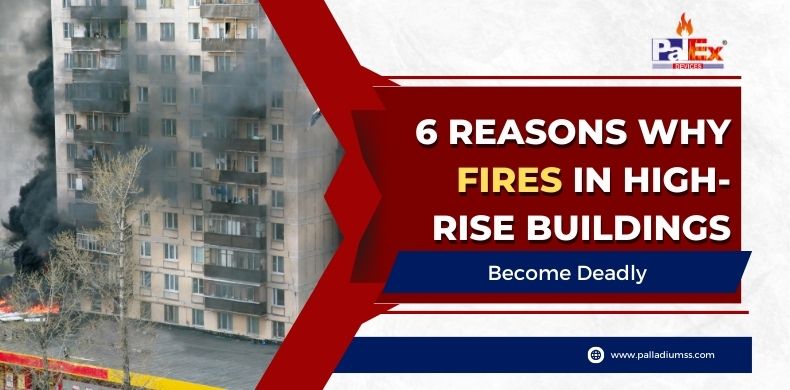
Here, are some factors that make fires in high-rise buildings deadly:
Absence of a Faulty Alarm System
The most common reason that fire in residential, commercial, or institutional places leads to death is the absence of the fire alarm system. One doesn’t know about the fire until these systems won’t warm them. It is essential to install fire safety equipment so that we get to know about fire when the fire is in its initial stages that help us to take proper fire safety plans and we can save many lives and property. These systems do not only warn you but also help in fighting the fire and extinguishing it.Inefficient Fire Exits
The fire exit is needed to plan carefully as it would be the only way to rescue the people during a fire breakout. Having efficient escape routes help in saving many lives. Every building member should know about the escape plan. The proper mentioning of the escape route minimizes the panic and people can safely exit the building.Monitoring the Functioning of Fire Detector Systems
Installing a fire safety system is not enough, one also has to maintain it regularly. All fire alarm systems should be maintained monthly and they must be checked quite frequently and if there is any trouble then you can replace and upgrade the system and can save lives. Choosing a technology solution like Palladium Safety Solution is also the best option.Old or Obsolete Fire Alarm
This is the most common problem in old buildings. The old building has an old fire alarm system that may fail when the fire breaks out so it is always advisable to upgrade the fire alarm system timely and properly from a reputed fire safety solution company. Palex zone 16 fire alarm system is activated as they have fire detectors, such as smoke, heat, or gas sensors.Non-Working or Not Installed Fire Sprinkler System
The best fire safety system is the one that not only warns or alarms but also helps you in controlling and extinguishing the fire. For a tall building, it is mandatory to install water sprinklers on every floor so that fire can be controlled till the firefighters arrive at the location.Unusable Fire Extinguisher
Also read :How to Prevent EV Fires in Your Business Garage?
Today, whether the building doesn’t have a fire extinguisher or if it is in any building, then people don’t know how to use it. So in any society, it must be mandatory that there should be fire safety training so that people can learn how to fight with fire and what to do if the fire breaks out. Always install a fire extinguisher from a well-known fire extinguisher manufacturer to get the best quality product. The higher is the building, the greater is the risk of losing more and more lives so fire safety is an essential part while designing any building to live happily and safely.
Fire Sprinkler Inspection Checklist For Shopping Malls
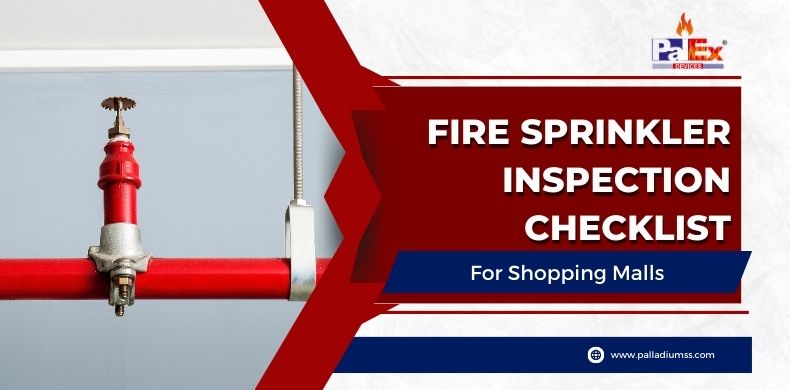
The sprinklers play a significant role in the fire safety system. It consists of a water supply system that provides adequate pressure and the exact flow rate to a water distribution piping system to which the fire sprinklers are joined.
However, only if it reacts quickly and sprinkles water it can reduce the risk of injury or death from fire. If they don’t, the result would be awful. To prevent this mishap, it is important to ensure the proper functioning of sprinklers.
If you are a property manager for shopping malls looking for a checklist to inspect the fire sprinklers, we have got you covered. Keep reading to know what must be checked and when.
Parts of the Sprinkler System that Needs Inspection are
- Control valves
- Pipes and fittings
- Gauges
- Main drain
- Alarm devices
- Pre-action/deluge valves
- Hangers/bracing
- Sprinkler heads
- Water flow alarm
- Antifreeze solution
- Backflow prevention components
How to Inspect the Fire Sprinkler System?
A fire sprinkler system consists of multiple mechanical and electrical parts that can fail to work overtime and prevent the fire sprinkler system from not functioning properly. This is why inspection is highly recommended. Below you will find a checklist of fire sprinkler components that needs inspection based on a schedule.Monthly Inspection
-
Inspect Valves If
- They are properly sealed, locked, or supervised.
- Free from physical damage or external leaks’
- They are normal openly opened or in closed positions.
- Labeled appropriately
- And finally accessible.
2. Gauges
Gauges need to be inspected monthly. However, there are different kinds of sprinklers systems, so inspecting gauges differ.3. In Wet Systems
Check if normal water supply pressure is maintained.4. In Dry Systems
Apart from checking water supply pressure, also ensure that the gauge on the quick-opening device maintains the same pressure as the gauge on the system side of the dry pipe valve.
Also, gauges on systems with nitrogen or low air pressure alarms must be inspected. Almost every fire safety system has this component, and it’s estimated that over 40 million sprinkler heads are fitted every year.Quarterly Inspection
In addition to the monthly inspection, you must add the following:- Water flow alarm and supervisory alarm devices for physical damage.
- As a part of an inspection, you can test the water flow alarm using a simple trick. For this, open the test connection on a wet pipe system and then the bypass connection on a dry pipe system. Now check if the system works as expected.
- If it is a hydraulic sprinkler system, inspect the hydraulic nameplate to ensure it’s attached correctly and can be seen easily.
- Inspect fire department connections and check for visible damage.
Also, check the pressure reducing valves and relief valves and ensure if it’s not leaking, maintains downstream pressures with the design criteria, and is in good condition.
Annual Inspection
<- The annual inspection must include all the inspections done in the quarterly inspection.
- Inspect all sprinkler heads, including the fittings and piping.
- Ensure the presence of extra sprinkler heads on-site and the tools that allow changing the sprinkler heads.
- Interior of dry pipe valves
- Finally, conduct a main drain water flow test to determine if there is any change in the water supply piping.
Also read :Benefits of Installing Fire Sprinklers in Residential and Commercial Buildings
Conclusion
Overall, a fire sprinklers inspection must be conducted to ensure that the shopping mall has a reasonable degree of protection for life and property from fire via regular inspection and testing methods. We have given a clear checklist on what has to be inspected, along with a proper schedule. I hope this quick guide sounds insightful.Fire Suppression System for Data Centers and Server Racks
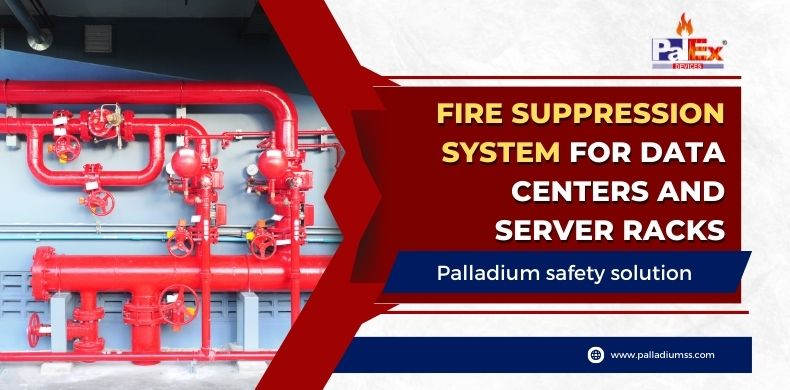
A fire suppression system involves a fire extinguisher, water sprinklers that help in restricting the spread of the fire. Fire suppression also helps in holding and controlling the fire. A fire suppression system is essential for data centers and server packs. As fire can occur within the digital equipment, cables, HVAC equipment, wires, raised floors, suspended ceiling, and other combustible things found in data centers. So data centers and server packs require.
Three levels of fire protection and suppression systems.
The three-level protection that a data center requires:
Building Level Fire Protection
The first level of fire protection is to protect the employees and building from fire. Water sprinklers and handheld extinguishers are key components of fire protection and suppression systems. Installing a fire extinguisher from a well-known fire extinguisher distributor on every floor and training the employees about how to use the fire extinguisher and what escape route to follow when a fire breaks out helps to save many lives. Some passive fire protection that includes firewalls and fire-rated floor assemblies can restrict the fire to spread and hence can easily be controlled and extinguished.
Room Level Fire Protection
Now it is time to protect the data center room from the fire. It can only be possible through a suitable fire alarm detection system. There must be smoke detectors and a Palladium zone 32 fire alarm system installed so that they can warn when the fire is in its initial stage and appropriate steps can be adopted to save the data center. Installing water sprinklers also helps in extinguishing small fires but the water can cause as much damage to servers and hard drives as fire can so it is advisable to always go for gas sprinklers.
This gaseous system can be an inert gas or clean agent gas. An inert gas is the mixture of nitrogen and argon gases as they help in decreasing oxygen levels in the room thus put the fire to an end. But special design nozzles are required to muffle the powerful sound given off when the inert system activates.
Clean agent gases are electrically non-corrosive, non-conductive, and leave no residue upon evaporation. This makes them the ideal fire suppression agents in data centers. Just like the water system this system works. These systems are known as total flood or engineered systems.
Also read :Kitchen Hood Fire Suppression System Inspection
Rack Level Fire Protection
The last level is to protect specific equipment. Some equipment is valued at more than 50% of the cost of the room so it creates the special need to protect the equipment at the rack level to save money and investment. So to protect them from any damage, special fast sensors are being installed near to the equipment so that if any unusual situation rises then it detects within seconds and suppresses it before the total flood system activates. So this helps to prevent the damage caused by fire and water.
Fire Suppression System Requirements When and Which Building Requires
While the Roman fire suppression system was effective in its time, it would not be adequate by today’s standards. In most modern buildings, a more sophisticated fire suppression system is required. These systems are designed to automatically detect and extinguish fires, and they are typically required by law in most jurisdictions.
Types of Fire Suppression Systems
There are two main fire suppression systems: sprinkler and gas suppression systems. Sprinkler systems are the most common type of fire suppression system. They work by automatically detecting a fire and activating a system of sprinklers that spray water onto the flames.- Dry Chemical Suppression System: The primary substances employed in dry chemical suppression systems and suitable for locations with active electrical equipment are mono ammonium phosphate, potassium bicarbonate, and sodium bicarbonate.
- Gas Suppression Systems: They work by releasing fire-extinguishing gas into the room where the fire is taking place. This gas suffocates the fire by depriving it of oxygen.
Which Building Requires Fire Suppression System
As mentioned before, in most jurisdictions, a fire suppression system is required by law in most buildings. This is because fire suppression systems save lives. By automatically detecting and extinguishing fires, they prevent the spread of fire and smoke, which can quickly fill a space and make it difficult to breathe. This is especially important in high-rise buildings, where the risk of a fire spreading is greater.
There are a few exceptions to this rule, however. For example, some small warehouses and storage units may not require a fire suppression system. This is because these spaces are typically not occupied by people, so there is no need to worry about the spread of smoke or fire.The list of buildings where Fire Suppression System is Required are:
- The food industry, like restaurants
- Microenvironments
- Oversized or Commercial vehicles
- Hazardous material storage units
- Body shop & Spray paint sectors
- Data Center or Server room
When is Fire Suppression System Required
In most cases, a fire suppression system is required when a building is first built. However, there are some situations where a fire suppression system may be required after a building is built. For example, if a building is being renovated or if the occupancy of the building changes, a fire suppression system may need to be installed.Also read :Fire Sprinkler System